Kids Fitness Class Ideas: 20 Gym Games for Ages 2 to 8
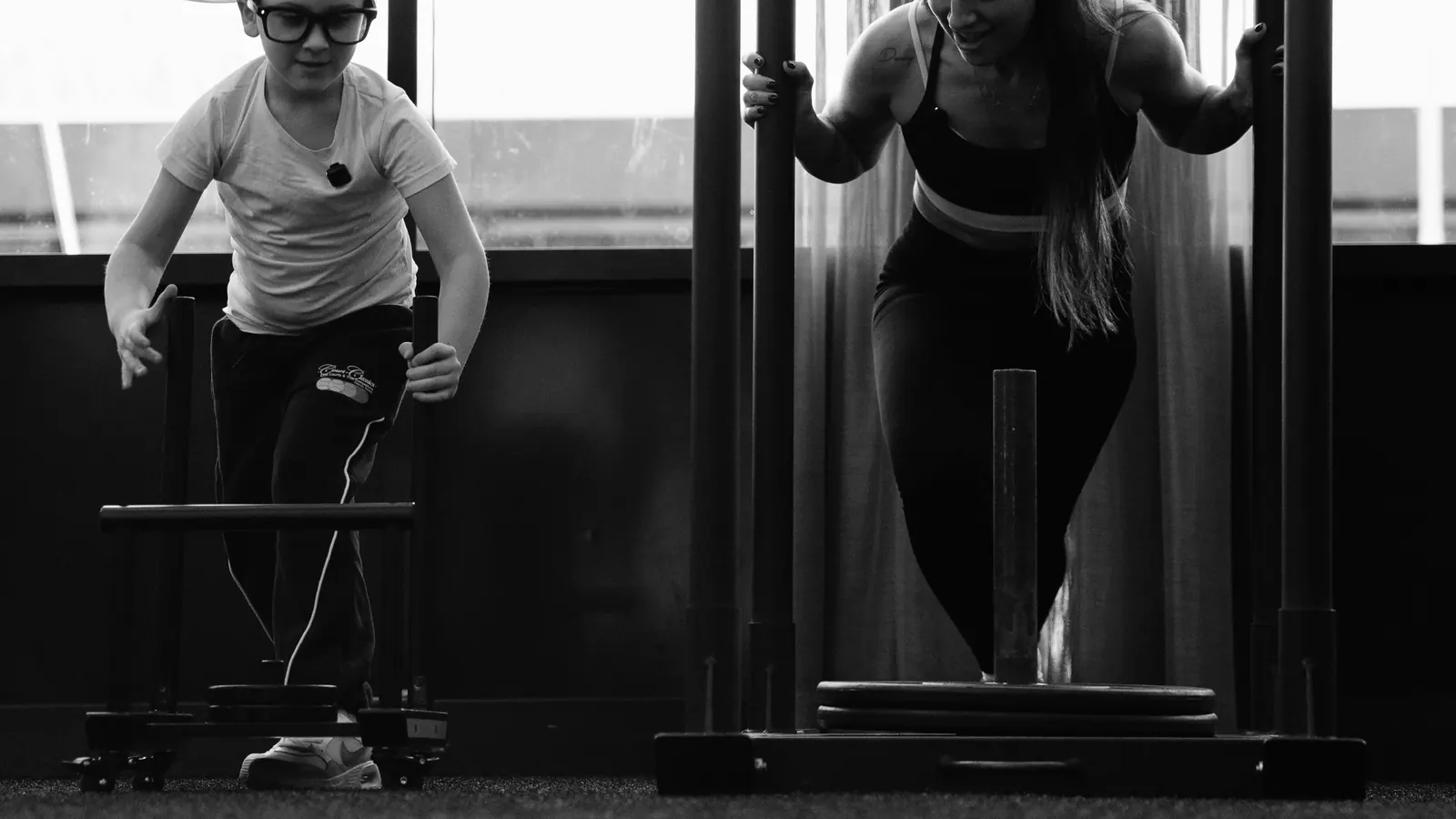
These are 20 kids fitness class ideas we would put in front of a class of 2- to 8-year-olds. Every game has the ages it suits, the setup, how to play and one coaching tip. They work as preschool gym games, as PE games for kindergarten, or as part of a weekly kids class at your gym.
Two rules for all of them: clear the floor before you start, and keep an adult in the room. If a kid says something hurts, they stop and sit out.
To build a full class from these games, use our kids fitness class lesson plan. If you are still deciding whether to run a class at all, start with how to start a kids fitness class.
Warm-up games
These PE warm-up games get everyone moving in the first five minutes, with no queues and no one sitting out.
Traffic lights
Ages: 2–8. Setup: Open floor, three coloured cones or cards. How to play: Green means run, yellow means walk, red means freeze. Add new colours as the kids get it: blue for hop, purple for crawl. Coaching tip: Keep the first round to three colours. Let a kid be the traffic light at the end.
Coach says
Ages: 3–8. Setup: Kids in a loose group facing the coach. How to play: The coach calls a move ("Coach says jump!"). If the coach leaves off "Coach says", nobody moves. No one is out; a kid who moves just does one star jump and carries on. Coaching tip: Use moves from today's skill block so the warm-up doubles as a preview.
Treasure collectors
Ages: 2–6. Setup: Beanbags scattered across the floor, one hoop per team. How to play: Kids collect one beanbag at a time and bring it home to their hoop, moving the way the coach calls: run, hop, bear crawl. Coaching tip: For ages 2–4, play it with parents as partners and no teams.
Shadow partners
Ages: 4–8. Setup: Kids in pairs, spread out. How to play: One kid moves, the other copies like a shadow. Swap every 30 seconds. Coaching tip: Give the leader a menu of three moves so the game does not stall.
Animal-walk games
Animal walks are the classic preschool gym games: everyone can do them, and every animal is a different way to move. Our page of gross motor activities has more moves by age.
Bear crawl relay
Ages: 3–8. Setup: Two or more lanes marked with cones. How to play: Bear crawl to the cone, run back, tag the next kid. Coaching tip: Hips low, hands flat. For ages 2–4, drop the relay and just crawl together.
Frog jump lily pads
Ages: 3–7. Setup: Spots or hoops in a path. How to play: Kids frog jump from lily pad to lily pad. Anyone who misses is "in the pond" and swims back with arm circles. Coaching tip: Land soft, like a frog on a leaf.
Crab walk carry
Ages: 4–8. Setup: A beanbag per kid, a bucket at the end of each lane. How to play: Crab walk with the beanbag on the belly and drop it in the bucket. Coaching tip: If the beanbag falls, put it back and carry on. No restarts.
Zoo keeper
Ages: 2–6. Setup: Open floor. How to play: The coach is the zoo keeper and calls an animal: bear, frog, crab, flamingo, snake. Everyone moves like it until the next call. Coaching tip: This works well with a screen: Buddy shows the animal move, kids copy, the coach calls the switch.
Team relay games
Fun PE games for kindergarten and up: short teams, short lanes, lots of turns.
Colour teams relay
Ages: 4–8. Setup: Teams by colour (bibs or wristbands), one lane each. How to play: Each runner does a move at the far cone (five squats, three jumps), runs back and tags the next. Coaching tip: With BabyGains Play for gyms, the move at the far cone is the one on the screen, and teams are already split by colour.
Beanbag bucket brigade
Ages: 4–8. Setup: Teams in a line, a pile of beanbags at the front, a bucket at the back. How to play: Pass beanbags down the line, over the head and under the legs, into the bucket. Coaching tip: Count together out loud. It keeps the line busy.
Cone flip
Ages: 5–8. Setup: Cones spread out, half upright and half on their side. How to play: One team flips cones up, the other flips them down. Stop after a minute and count. Coaching tip: Play a few short rounds instead of one long one.
Over-under ball pass
Ages: 4–8. Setup: Teams in lines, one soft ball each. How to play: Pass the ball over the head, then under the legs, down the line. The last kid runs to the front. Coaching tip: For younger kids, use only "over" first.
Freeze and music games
Freeze dance with moves
Ages: 2–8. Setup: Music and open floor. How to play: Kids dance. When the music stops, the coach calls a pose to freeze in: star, tree, superhero. Coaching tip: Choose the pause on the beat so the kids can hear it coming.
Musical mats
Ages: 3–8. Setup: Mats or spots, one per kid (nobody is out). How to play: Kids move around the mats as the coach calls a move. When the music stops, everyone finds a mat and holds a balance. Coaching tip: Take one mat away each round, so kids share. No one sits out.
Statues
Ages: 4–8. Setup: Open floor, one kid as the museum guard. How to play: Kids move when the guard turns away and freeze when the guard looks. Anyone caught moving does a jump and carries on. Coaching tip: Rotate the guard every round.
Obstacle course ideas
Obstacle courses are the easiest way to put a whole class through the same moves. Keep stations low and soft, with an adult at the tricky one.
Jungle trail
Ages: 2–6. Setup: Mats to crawl under, a line on the floor to balance along, spots to jump between, a tunnel or two chairs and a sheet. How to play: Kids go through one at a time with a short gap between them. Coaching tip: Tell the story as they go: under the vines, along the log, over the river.
Superhero training circuit
Ages: 4–8. Setup: Four stations: jumps over a low foam block, bear crawl, a balance line, a soft-ball throw at a target. How to play: Small groups rotate on the coach's whistle. Coaching tip: Name each station after a power: super jump, super strength, super balance, super aim.
Build your own course
Ages: 6–8. Setup: A pile of cones, spots, hoops and foam blocks. How to play: Teams build a course for the other team, then swap. Coaching tip: Set two rules first: everything stays low, and every station must be safe for the youngest kid.
Cool-down games
Calm games for the last five minutes. For more ideas, try the ABCs of fitness: a move for every letter.
Sleeping lions
Ages: 2–8. Setup: Kids lie on their backs on mats. How to play: Everyone lies still as a sleeping lion. The coach walks around; any lion who wriggles does a slow roar and lies back down. Coaching tip: Dim the lights or lower the music.
Balloon breathing and star stretch
Ages: 2–8. Setup: Kids standing on their spot. How to play: Breathe in and grow tall like a balloon, breathe out and float down. Finish with a big star stretch and a high five. Coaching tip: Count the breaths slowly. Three is enough.
Putting the games together
Pick one game from each group and you have a class: a warm-up game, an animal walk as the skill, a relay or an obstacle course as the main game, and a calm game to finish. Repeat a favourite every week and add one new game; kids like knowing what is coming.
If you want the moves on a big screen, BabyGains Play for gyms lets your coach run the class from a phone while Buddy shows each move, with teams by colour. The Gym Playbook has more programming ideas for family gyms, from family workouts to themed events. And if parents ask how to keep it going at home, that is what we call fitness parenting: short games, done together.
Frequently asked questions
1. What are good fitness games for preschoolers?
Simple games with one rule and lots of moving: traffic lights, zoo keeper, frog jump lily pads, freeze dance and a short obstacle course. For ages 2 to 4, play with parents as partners and skip teams and scores.
2. How many games should a kids fitness class have?
Three or four in a 30-minute class: a warm-up game, a skill game, a main game and a calm game to finish. Repeat one favourite each week and add one new game.
3. What equipment do I need for these games?
Cones, spots or hoops, beanbags, soft balls, mats and some music. A few low foam blocks help for obstacle courses. Most of the games need nothing else.
Enjoyed this article?
Get more like it in your inbox. No spam, just good reads for parents who lift.